

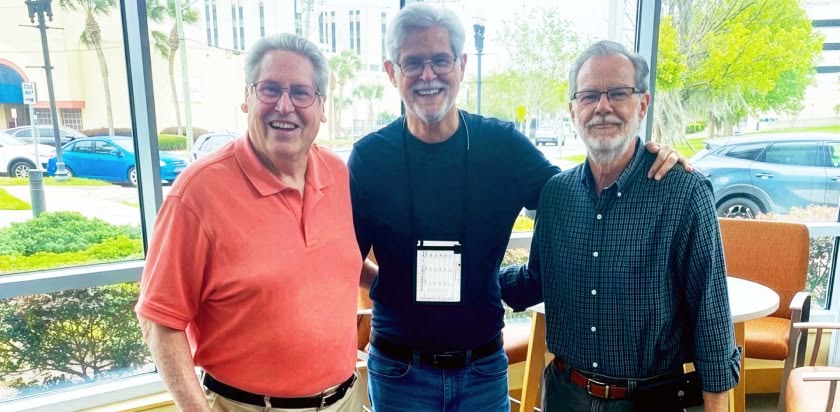
For decades, Bill Leseman, Phil Williams, and Bill Behenna built a close-knit friendship rooted in family, public service and shared experiences in Tallahassee, Fla. From Friday night Wallyball games to ski trips and family gatherings, their bond remained constant through every stage of life.
What none of them anticipated was that their friendship would one day become a critical support system in navigating the same diagnosis: prostate cancer.
Choosing Proton Therapy After a Prostate Cancer Diagnosis
Bill Leseman was the first to face the diagnosis in 2014. After being presented with conventional treatment options, he began researching alternatives and learned about proton therapy.
Encouraged by a friend who had previously undergone treatment, he chose proton therapy at the UF Health Proton Therapy Institute in Jacksonville. He was treated in 2015 and is a “balloon brother,” he said referring to the type of immobilization device used during his proton therapy sessions. His decision to have protons and his experience during and after treatment would later influence his friends’ care journeys.
Advocating for Advanced Radiation Treatment Options
Nearly a decade later, Phil Williams received his own prostate cancer diagnosis after elevated PSA results led to further testing.
When presented with treatment options, Phil already knew there might be another path.
“I wanted Door #3,” he said referring to proton therapy.
Although the option was not initially offered through his care team, Phil pursued the UF Health Proton Therapy Institute independently. Drawing on Bill Leseman’s experience, he contacted the Institute directly and began treatment.
His experience was marked by a streamlined intake process, responsive care team, and manageable side effects during his course of proton therapy.
Facing High-Risk Prostate Cancer with Confidence and Support
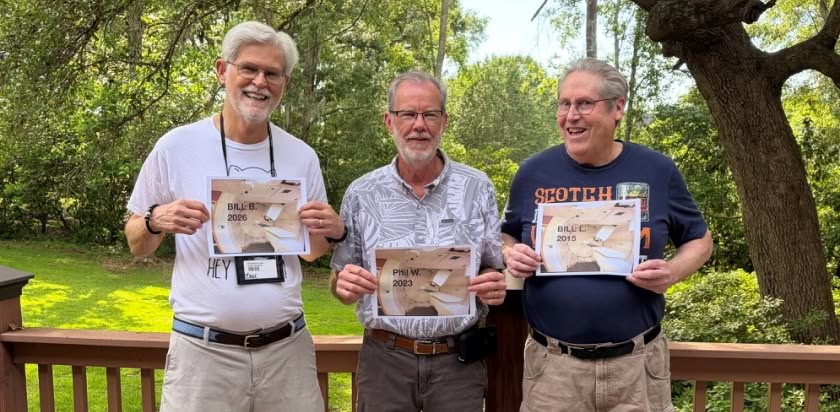
In late 2025, Bill Behenna became the third friend to receive a prostate cancer diagnosis, this time classified as high-risk.
Despite the seriousness of the diagnosis, he had a distinct advantage: firsthand insight from two trusted friends.
“There was never a doubt of which direction I would take,” he said.
After connecting with the UF Health Proton Therapy Institute, he quickly began treatment. From his first consultation, he noted the Institute’s organization, expertise and patient-centered approach. He completed treatment in spring 2026 and remains optimistic as he moves into follow-up care.
How Shared Patient Experiences Shape Treatment Decisions
While each diagnosis and treatment plan was unique, all three men credit their friendship as a key factor in their decision-making process.
Their conversations, once centered on hobbies and family, evolved into discussions about PSA levels, biopsy results and radiation therapy options. By sharing knowledge and experiences, they helped each other approach treatment with greater clarity and confidence.
From Patients to Proton Therapy Ambassadors
Today, their connection to the Institute continues beyond treatment.
Bill Leseman and Phil Williams now serve as patient ambassadors, sharing their experiences with others newly diagnosed with prostate cancer. Bill Behenna has also taken steps to join them in this role.
Together, they aim to help other patients better understand their treatment options including proton therapy as a form of precise radiation treatment.
A Prostate Cancer Patient Story Centered on Friendship, Knowledge, and Hope
Their story underscores an important message: when facing a prostate cancer diagnosis, understanding all available treatment options can make a meaningful difference.
For these three lifelong friends, an unexpected challenge became a shared journey — one defined not only by advanced cancer treatment, but by trust, resilience and enduring friendship.