

My Journey with the UF Health Proton Therapy Institute
By Patrick Palompo
In the spring of 2022, I started noticing something unusual. Breathing through my nose became difficult, and at first, I chalked it up to the usual seasonal allergies. But this time, it felt different. My sinuses were blocked in a way I had never experienced before. I decided to visit an ENT, who recommended removing what appeared to be nasal polyps in my right nasal cavity.
After the procedure, my ENT called me with news that changed everything: the biopsy showed squamous cell carcinoma.
Finding the Right Place for Treatment
My first stop was Baptist MD Anderson, where I underwent surgery to remove the tumor. Unfortunately, because the cancer was located at the base of my skull, my surgeons could only remove about 95% of it. The remaining 5% would require radiation—precise radiation.
That’s when I was referred to the UF Health Proton Therapy Institute. Their reputation for treating complex tumors with proton therapy made the decision easy. I felt confident I was going to the right place.
What Treatment Was Like
My treatment plan included 37 proton therapy sessions over eight weeks. Each visit took about 20 minutes from the moment I walked in to the moment I walked out. Because of where my tumor was located, the gantry positioned me three different ways during each session, with each beam lasting only 15–30 seconds.
“The process was efficient, but what stood out most wasn’t the technology—it was the people.”
The Staff Who Made All the Difference
Every single staff member left an impression on me. My radiation oncologist, Dr. Roi Dagan, was exceptional. He took the time to explain every step of the process and never made me feel rushed. His patience and willingness to answer every question gave me confidence and peace during a very uncertain time.
The nursing team was equally incredible—always accommodating, always supportive, and full of practical advice for managing skin care and healing throughout the treatment.
And the radiation technicians were the ones who helped me feel at ease every single day. Their kindness, consistency, and calm presence turned what could have been a stressful routine into something I genuinely felt comfortable with. I always felt cared for, never like just another patient on the schedule.
Advice for Others Facing a Cancer Diagnosis
If I could offer one piece of advice, it would be this: don’t be afraid to ask questions. Your medical team is there to help you, and understanding your treatment can make the journey less overwhelming.
Also, be honest with your family and friends. When people ask how you’re doing, let them in. You don’t have to carry everything alone. Support groups can also be incredibly helpful—connecting with others who truly understand what you’re going through can make a world of difference.
Life After Treatment
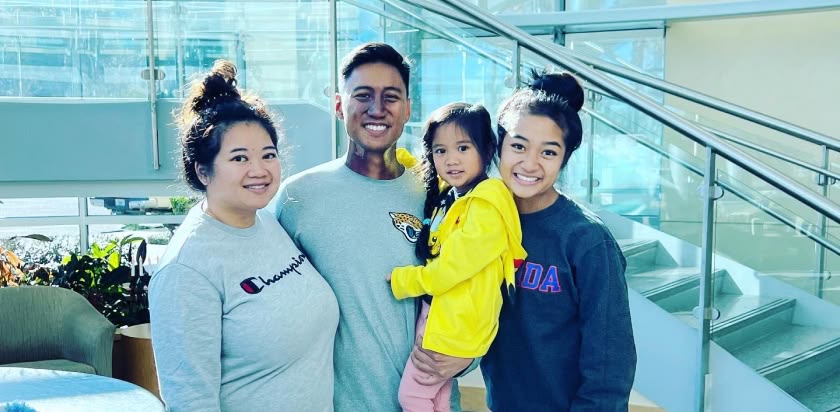
Today, I’m back to my full-time work as an electrical engineer, working from home and enjoying life with my wife and our two daughters, ages 24 and 7. I love working on cars, playing pickleball and picking up my guitar whenever I can. But nothing brings me more joy than raising my kids. Going through cancer taught me to cherish every moment—especially the ordinary ones.
Why I Joined the Ambassador Program
I joined the ambassador program because I want to be there for others who are beginning their own cancer journey. I don’t have all the answers, but I know how much it meant to me to talk to someone who had been through it. Sometimes the most powerful thing you can offer is simply your presence.
Looking Back
I’ve now been cancer free for three years, and I’m incredibly grateful. I know that every person’s story is unique, and every journey looks different. What we all share, though, is the need for connection and understanding. If sharing my experience helps even one person feel less alone, then it’s worth telling.
Thank you!
Patrick Palomp