

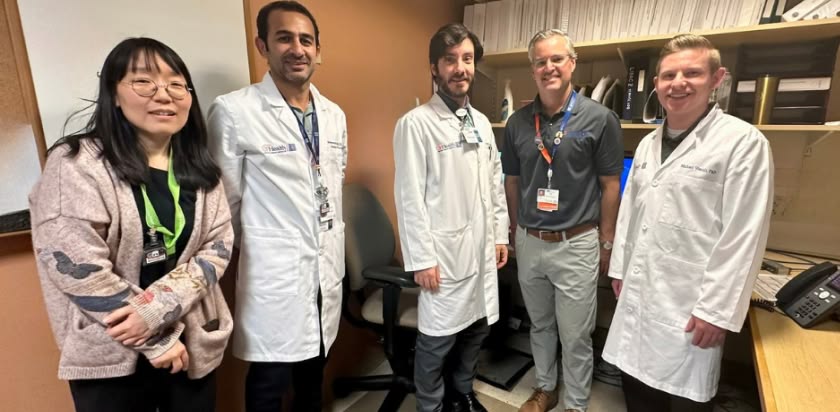
Dr. Sapienza is now treating gynecological cancers at the UF Health Proton Therapy Institute
What was the most rewarding about your first year at the UF Health Proton Therapy Institute?
I would highlight two particularly rewarding aspects from my initial year at the UF Health Proton Therapy Institute. Firstly, it has been professionally fulfilling to collaborate with outstanding colleagues across all areas of the department and to contribute to the delivery of exceptional external beam treatments (teletherapy; 'tele' being the Greek root meaning "at a distance") utilizing state-of-the-art proton therapy and advanced X-ray techniques. Additionally, I have valued the opportunity to lead the implementation of a new division within our Department – brachytherapy ('brachy,' the Greek root meaning "short distance").
What is brachytherapy?
Brachytherapy is an internal form of radiation therapy in which radioactive material is placed directly inside or adjacent to the tumor. Its earliest applications date from the early 1900s, following the pioneering discoveries in radioactivity by Maria Salomea Sklodowska-Curie, after whom this modality is also named “Curietherapy”. Historically, the development of brachytherapy lagged advancements in external beam radiotherapy (with proton therapy representing the pinnacle of these complementary methods). However, recent progress in imaging, miniaturized high-activity sources and computational capabilities have enabled brachytherapy to emerge as an excellent method for delivering high doses to tumors. We are currently witnessing a global initiative among leading institutions to develop scalable image-guided adaptive brachytherapy (IGABT) pathways, and I am both honored and mindful of my responsibilities as I lead these efforts at the University of Florida.
Why is brachytherapy used to treat some gynecological cancers?
Gynecological cancers affect women of various ages and can cause significant damage to structures located in anatomically delicate regions surrounded by radiosensitive organs such as the rectum, intestines and bladder. The radiation doses required for tumor eradication cannot be safely delivered with external beam radiotherapy alone, as this approach unavoidably exposes normal tissues to radiation during entry (X-ray and proton) and exit (X-ray). Combining external radiotherapy with internal brachytherapy increases the likelihood of cure by permitting higher, more targeted doses to the tumor. In this phase of treatment, advanced image guidance and the technical expertise of the brachytherapist are critical for accurate applicator placement, thereby safeguarding healthy tissue. Notably, the principles of brachytherapy—initially developed for gynecologic tumors—are now being expanded to offer therapeutic benefits in the management of other malignancies.